
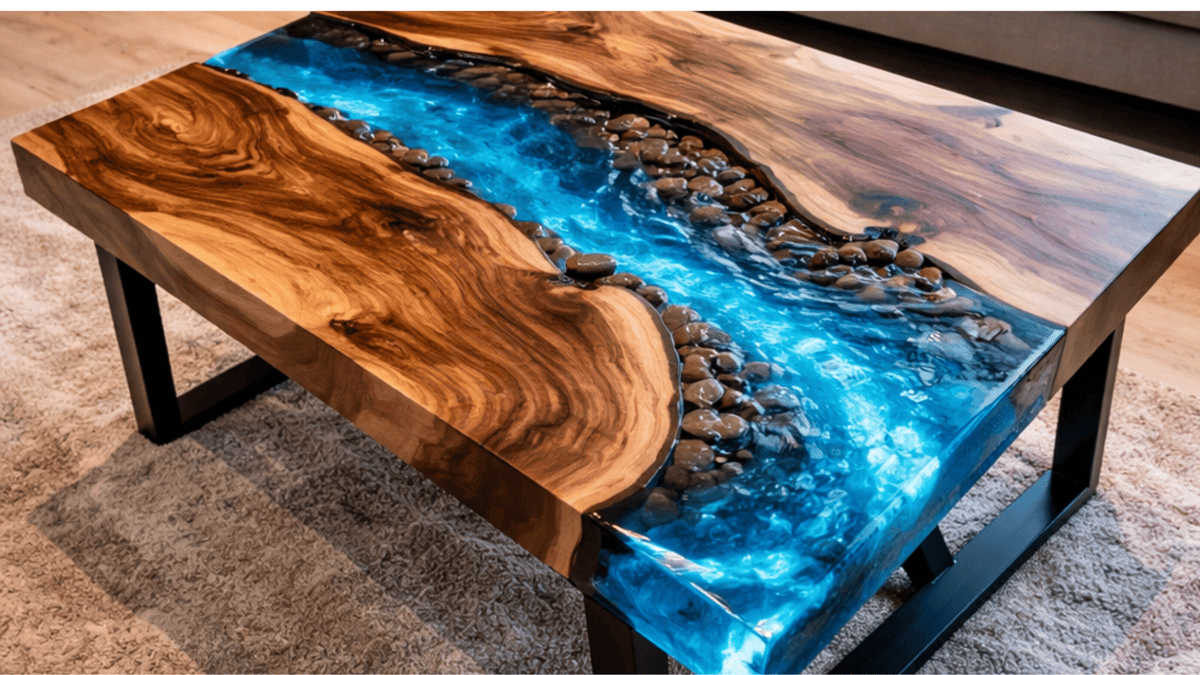
Furniture is always an important element in the life of a person, and it serves basic purposes like comfort, storage, and functionality. For several centuries, wood has been the most reliable and preferred material in making furniture, and this is because wood is strong, warm, and beautiful. However, with the current lifestyles, interior decor, and aesthetic tastes, the purpose and role of furniture have transformed from just being functional to being an identity for creativity and class. Perhaps one of the most striking innovations in modern design is the combination of wood, resin art, and texture art, a meld that turns furniture into a veritable functional art form.
It represents a point of meeting between nature and modern creativity. The organic character of the wood, blended with the fluidity of resin and the depth of texture art, enables designers to push the boundaries of what furniture can be: unique, emotive, and visually powerful
The use of wood in furniture making dates back to the earliest days of civilization. It was found to be durable and available, hence becoming a wood of choice for many artisans through the ages. Beyond the practical qualities of this resource, wood carries emotional and aesthetic values. Each piece of wood tells a story through its grain patterns, knots, cracks, and natural color variations.
In modern-day interiors, strong wood furnishings symbolize authenticity and connection to nature. Live-edge slabs, reclaimed timber, and raw finishes are in particular valued due to the fact that they keep the authentic man or woman of the fabric. Unlike synthetic materials, wood ages gracefully, developing a patina that complements its charm over the years.
However, traditional wooden fixtures regularly follow familiar forms and styles. While lovely, it is able to, on occasion, sense predictability in a world that increasingly values originality. This is where resin and texture art are available, pushing wood beyond its traditional boundaries.
Resin Art: Movement, Colour, and Depth
Resin artwork has swiftly won recognition in recent years, in particular in furniture design. Epoxy resin is a liquid that hardens into a strong, glass-like floor. When mixed with timber, it creates lovely visible results that feel both contemporary and natural.
One of the most iconic examples is the resin river desk, in which resin flows among two slabs of timber, mimicking the movement of water. But resin art goes a ways past this famous style. It lets artists test with:
- Transparent and translucent layers
- Rich pigments and formidable colourings
- Metallic powders, stones, shells, and herbal inclusions
- Abstract styles stimulated via oceans, marble, or galaxies
Resin introduces an experience of movement that contrasts beautifully with the stable, grounded nature of timber. The unpredictability of resin pours guarantees that no two portions are ever precisely alike, making every introduction honestly particular.
From a practical angle, resin additionally enhances durability. It seals the surface, protects against moisture, and increases resistance to stains and wear. This makes resin-wood furniture suitable not only for homes but also for commercial spaces such as cafés, hotels, and offices.
Texture Art: Adding Dimension and Emotion
While resin provides visible depth and fluidity, **texture art** introduces a tactile and emotional size. Texture artwork involves constructing raised surfaces through the use of substances consisting of texture paste, plaster, sand, material impressions, or sculpting compounds. These textures can be diffused or formidable, smooth or rugged, depending on the inventive imagination and perspective.
In furniture layout, textured artwork serves several functions:
- It adds depth and contrast to flat surf
- It creates a handmade, creative feel
- It interacts with mild and shadow, enhancing visual drama
- It invites touch, making fixtures extra enticing
Texture artwork is regularly associated with wall artwork, but its use in furnishings is a developing fashion. When sealed with resin or protective coatings, textured surfaces become durable and sensible at the same time, while keeping their creative integrity.
The Harmony of Wood, Resin, and Texture
The genuine magic happens when **wood, resin, and texture artwork** come together in an unmarried piece. Each element performs an awesome role:
- Wood presents shape, warmth, and natural individuality
- Resin adds movement, shade, and a cutting-edge end
- Texture art brings depth, individuality, and emotion
This combination allows designers to create fixtures that feel alive. An eating desk can resemble a flowing river with textured riverbanks. An espresso table can evoke barren region landscapes, ocean waves, or abstract artwork. Even practical gadgets like reception desks or countertops can grow to be formidable inventive statements.
Such portions blur the road between furniture and sculpture. They aren’t simply intended to be used but also favoured.
Customisation and Personal Expression
One of the strongest advantages of wood fixtures with resin and texture art is their capacity for personalization. Unlike industrially produced furnishings, those portions are regularly made to order, allowing clients to take part in the innovative process.
Customers can pick out:
- Wood type (teak, walnut, oak, reclaimed timber)
- Resin hues and transparency
- Texture styles and subject matters
- Finishes (matte, gloss, satin)
- Size and shape in step with their area
This stage of personalization creates a sturdy emotional connection between the proprietor and the fixtures. The piece will become a reflection of the patron’s taste, lifestyle, and identity.
Sustainability and Responsible Design
Sustainability is an increasing number of vital things in modern-day design. Wood-resin-texture fixtures can guide eco-aware practices when approached responsibly. Reclaimed timber, fallen trees, and offcuts that could otherwise go to waste can be converted into cost-effective, creative furniture.
By extending the life of present substances and developing durable, long-lasting pieces, this technique counters the culture of disposable fixtures. When clients spend money on specific, handmade objects, they’re more likely to cherish and keep them for years.
Applications Across Spaces
Furniture made with wood, resin, and textured art suits a huge range of environments:
- Luxury homes: Statement eating tables, coffee tables, headboards
- Boutique inns: Reception desks, characteristic tables, wall panels
- Cafés and restaurants: Bar counters, communal tables
- Offices: Executive desks, conference tables, emblem-centred designs
- Art spaces: Functional installations and collectable portion
In each setting, such furniture becomes a focal point, elevating the overall interior design.
The Business and Market Potential
From an enterprise perspective, this style of fixture offers sturdy capability. Because each piece is specific and handcrafted, it commands higher charges than conventional furniture. Customers are not simply procuring materials; they may be investing in artwork, craftsmanship, and exclusivity.
Social media structures like Instagram, Pinterest, and TikTok have further fueled the name. Process movies showing resin pours and texture introduction enchant the masses of thousands of perspectives, turning furniture making right into an effective visual advertising device.
With the right branding and satisfactory control, wooden-resin-texture furniture can position itself firmly within the **luxurious and creative market segment**.
Challenges and Craftsmanship
Despite its enchantment, this artwork form requires talent, patience, and technical expertise. Resin artwork requires precise blending, temperature manipulation, and curing procedures. Textural artwork calls for expertise in composition, balance, and durability.
Such furniture becomes a focal point, elevating the general indoor design.
Wood would have to be nicely dried and prepared to avoid cracking or warping.
However, those challenges also create fees. Mastery of these techniques sets skilled creators apart and reinforces the exclusivity of their paintings