The Ultimate Guide to Guest Blogging: How to Write Articles That Actually Work for Other People’s Websites. Guest blogging is like running—I don’t actually love doing it, but I absolutely love the feeling of accomplishment when it’s done. That’s the truth. I write guest blogs about websites, SEO, and small businesses for other publications—and why do I write guest blogs? Because when done right, guest blogging is one of the most powerful marketing tools available to small business owners. But here’s the thing—most people are doing it wrong. In this post, I’ll share all the experience I’ve gained from creating effective guest posts that deliver real results. Here are 13 practical tips for those who have never written before, as well as seasoned professionals looking to take their guest-blogging game to the next level.
1. Set Clear Expectations with Your Publisher (Early!)
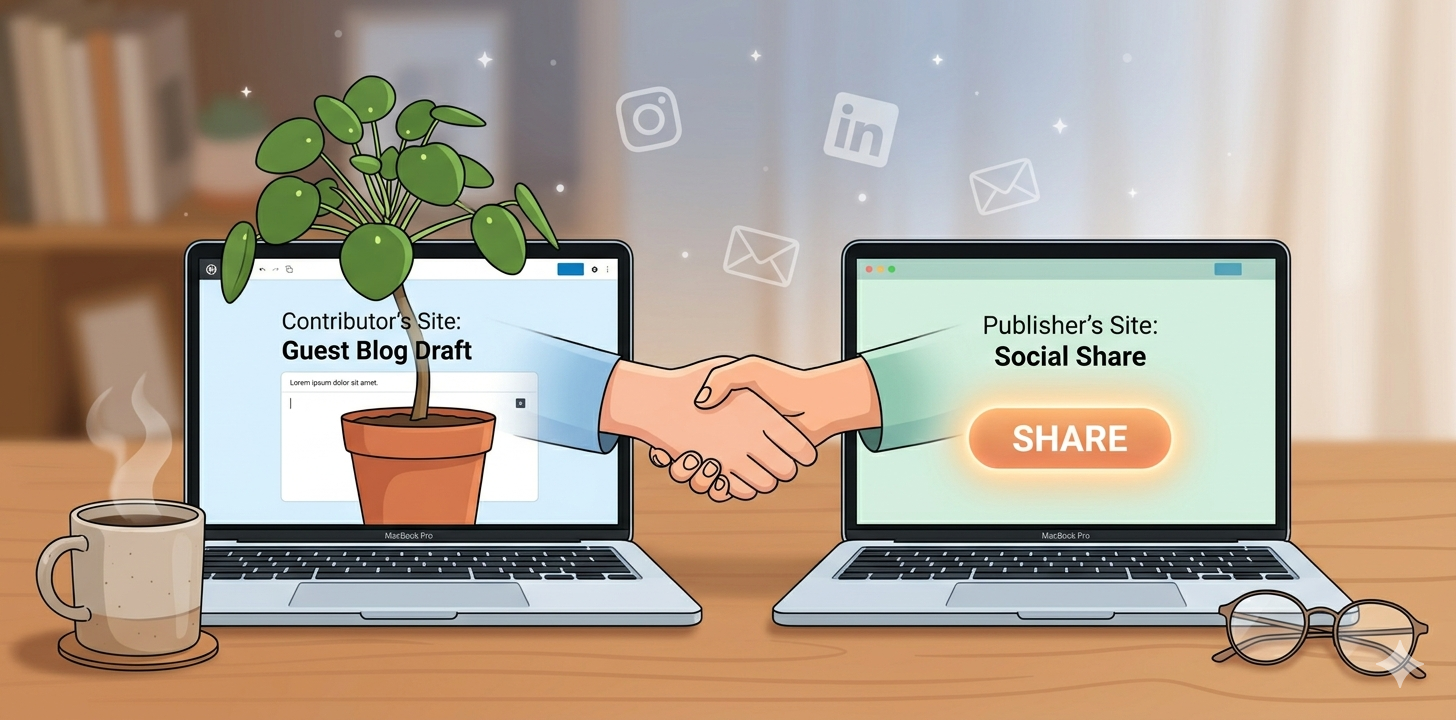
Picture this: You’ve spent four hours crafting what you believe is your finest work. The publisher then makes heavy edits, removes your backlinks, changes your images, adds a typo to your name, and never shares it on social media. Oh, and they repost it on five other websites under their own name.
Expectations from the contributor:
– 800-1,250-word article on [subject matter]
– At least 5 backlinks to your website
– Editorial approval rights
– Deadline by [date]
2. Ask for Editorial Guidelines
This deserves its own section because it’s so frequently overlooked.
Editorial guidelines tell you exactly how to write for that specific publication. They might include guidance on tone of voice (“We’re whimsical” or “We HATE whimsy”) or technical preferences (“Use common contractions like can’t instead of cannot”).
While guest bloggers typically retain more personal voice than staff writers, you absolutely must follow guidelines about *what* you can write.
Common editorial guidelines include:
– No swearing or adult language
– No monetised/affiliate content (including links)
– Professional relationships must be disclosed
– The article cannot exist elsewhere
– Must link to small/independent businesses where possible
– Minimum 750 words
3. Choose a Topic for Your Crossover Audience
You may have already pitched your topic—in which case, skip ahead. But if you’re still deciding, listen up.
Here’s the conventional wisdom: Write for the publisher’s audience.
Let me explain. Imagine Victor sells outdoor dining furniture. He’s writing for a local interior designer’s blog. Their audience loves reading about cute interiors, so Victor writes a brilliant article about creating the ultimate kitchen coffee bar.
It’s a great article! It gets loads of traffic. Some of those readers click through to Victor’s website. Where they find outdoor dining. Nothing about kitchens or coffee bars.
The fix: Write for the overlap—the people who are in both your audience and the publisher’s audience. This puts your expertise into context and significantly increases the chances of making a relevant impression.
4. Write at the Right Knowledge Level
Back to Victor. This time, he’s writing a sensible article about choosing durable outdoor dining furniture. In his section on wooden furniture, he mentions that hardwood is more durable.
“Hardwood” is correct. But does the interior designer’s audience know which woods are hardwoods? Probably not. Victor needs to add examples: teak, acacia, and eucalyptus. Simple fix.
Now imagine Victor writes the same article for a woodworking guild. Those readers absolutely know which woods are hardwoods—so the extra explanation would be patronising.
Not sure about your audience’s knowledge level? Write the shortest possible explanation for the person who knows the least. This works for your own blog articles too.
5. Apply Your Own Best Blogging Practices
A good blog is a good blog, regardless of whose website it sits on. The same principles that help your articles rank higher, attract traffic, and grow your reputation apply to guest blogs.
Here are some of the most useful resources from my team (I’ll provide links to these resources since they are actually helpful):
- – Topic selection: Blog SEO: 41 ideas for listicle content
– Headline creation: How to create perfect blog post titles using the NASALS technique
– Listicle writing: 6 easy steps to writing a killer listicle
– Adding subjectivity: 10 simple ways to make blog posts more subjective
– SEO optimisation: 10 creative ways to optimise the SEO of existing blog articles
6. Introduce Yourself in the Introduction
Your blog introduction sets the scene—and an essential part of that scene is explaining who’s talking.
All you need is one sentence:
– “As someone who makes outdoor dining furniture.
– “These are tips I’ve picked up over 10+ years decorating Christmas trees.
– “That’s why I write guest blogs on my specialist topic—websites, SEO, and small business.”
7. Schmooze Your Publisher (Authentically)
If you’re writing a guest blog for someone you want to impress, be a little bit of a suck-up. Just a little.
Drop in references to their projects or products. Link to other articles on their website. One underrated benefit of guest blogging is that it builds and blossoms professional relationships—what starts as a guest blog could become a bigger collaboration.
8. Go to Town with Backlinks
Do you recall my mention that guest blogging generates backlinks in guest blogs that enhance SEO? That is, in fact, the primary reason for its immense popularity. A backlink is a connection from another website to yours, and obtaining them is surprisingly difficult. Read
Many guest bloggers typically include one or two backlinks, often placing them in the introduction (to link their brand name) and/or the conclusion. That’s excellent. However, let’s strive for excellence.
Make a special effort to add links to other pages within your own website. In this article, I have already linked to six other Studio Cotton pages. Although it is link-heavy, I doubt you ever thought, This is rather linky.
Although the first backlink offers the greatest SEO benefit, every backlink presents a chance to drive additional traffic to your site, so you should capitalise on all of them. Read one of my best articles about backlinks.
9. Never, Ever Turn It Into a Sales Pitch
There is one thing I never want you to do: sell.
A blog post should not be a sales pitch. If someone is looking to purchase an item, they will search for a sales page or a specific product. Crafting a sales pitch that implies “you need this product I’m selling” is a major turnoff. It leads readers to believe you are writing solely to take money from them.
The purpose of a blog is to inform, inspire, entertain, and provide answers. Yes, mention your products—particularly when they exemplify a point—but never pressure readers into making a purchase. Not even in the conclusion.
10. Include Multiple Contact Points in Your Conclusion
In your conclusion, make sure to outline 3 to 4 distinct next steps.
If you enjoyed this article, be sure to read [title of other post] on my blog. I’d also love to hear your thoughts—feel free to DM me on Instagram if you think I missed anything. I also share weekly posts on LinkedIn and occasionally create short TikTok videos about them. Until next time, you can learn more about me here.
11. Use Google Docs for Sign-Off
Anyone with a blog almost certainly has a Google account, as it is required to use tools like Google Analytics and Search Console. Google Docs allows you to share your draft, enabling the publisher to either suggest edits or provide final approval.
Regarding edits: While this may be controversial, I have no issue with them. Establishing a precedent that encourages feedback can actually enhance articles. It also helps identify typos and inaccuracies before they are published.
12. Provide Everything Your Publisher Needs
We’re done writing. Now let’s tie up loose ends before they even get loose.
Your publisher will always need the following:
- A mini bio for your author credit
- A photo of you
- A featured image for the article
- Your logo
- Links to your social media platforms
Instead of waiting to be asked, look at your publisher’s blog and prepare a folder with everything they need. Better yet—send them a link to your media page where they can help themselves to your brand assets.
13. Promote the Heck Out of Your Guest Blogs
How do you get more people to read your guest blog? Send them to it. Share it on all your active social media platforms. Tag your publisher to make it easy for them to share your posts. And if you’re looking for more ideas on spreading your reach, check out my guide: 13 smart ways to promote that totally brilliant blog post.
Conclusion
I hope you’ve found these tips useful. I know you’re going to be a total guest blogging pro when you start applying them. If you enjoyed this article, check out our other blogs. Guest blogging isn’t always fun, but the rewards—backlinks, exposure, and credibility—make it worthwhile. By setting clear expectations, writing for your crossover audience, and promoting strategically, you’ll transform every guest post into a powerful marketing asset. Now go write something brilliant.