

Today, we give you full knowledge of the pros and cons of investing in gold in 2026. By 2026, financial uncertainty will continue to drive both retail and institutional investors toward precious metals. But before you rush to trade, you want to have a clear eye on the pros and cons of investing in gold. While 2026 continues as a security, it is not out of danger, especially when you factor in new 2026 regulations, virtual asset competition, and regional networks. This article also covers the five biggest mistakes. Gold Buyers Still Make—And How to Avoid Them; compares Gold Bars vs. Coins: Which is Better for Your Strategy?; and offers neighbourhood-specific
Let’s break down whether or not gold deserves a place in your 2026 portfolio.
Profit and Loss of Gold Investing in 2026
Benefits (why 2026 Favours Gold)
1. Inflation hedge that still works
In 2026, central banks will walk a tightrope between tariff cuts and sticky inflation. Gold retains its historical purchasing power. When fiat currencies depreciate, gold bullion tends to push upwards.
2. Portfolio diversification and low correlation
Gold is largely moving back to stocks and bonds. In a gold-investing risky in 2026 “good for a long time” interest rate environment, a 5–15% gold allocation could reduce overall portfolio risk.
3. Liquidity and public value
Gold bars and coins can be sold in almost any U.S. state. Unlike real estate or artwork, gold does not need a separate buyer–refiner; banks and dealers provide almost instant liquidity.
4. A haven in times of geopolitical crisis
With continued tensions in distribution chains in Eastern Europe, the South China Sea, and the Middle East, 2026 remains unpredictable. Gold acts as a non-sovereign form of token.
Losses (actual risk of Gold Investing in 2026)
1. No passive income
Gold will not pay dividends or interest. By 2026, some high-yield financial savings calculations show four to five percent as the potential cost of holding physical gold.
2. Storage & Insurance Costs
Safe deposit boxes, home safes, or allocated vault storage all cost money. Insuring bullion adds another 0.5–1% annually.
3. Price Volatility in the Short Term
In a strong greenback or rising currency environment, gold can fall by 10–20%. In 2026, if the Fed surprises with hikes, gold could correct sharply.
4. Falsification & Accuracy Risk
Without proper authentication, you may buy tungsten-containing bars or low-weight coins. These risks are exacerbated when buying from unregulated online marketplaces.
So, is it worth investing in gold in 2026? Yes—for long-term money savings, not for small profits now. The answer depends entirely on your strategy and ability to steer clear of not uncommon mistakes.
Five of the Biggest Mistakes Gold Investors Make in 2026—And How to Avoid Them
Even experienced buyers fall into these traps. Here’s a fact check from 2026.
Mistake 1: Buying without testing or certification
Many buyers take the supplier’s word for it. influence? Fake or sub-purity bar.
Disclaimer: Only buy bars from LBMA-certified refiners (e.g., PAMP, Valcambi, Metalor). Require a test sheet with verifiable, consecutive, detailed variations.
Mistake 2: Overpaying on Premiums
In 2026, the change in premiums is dramatic. Some trading websites charge 8–10% more for regular gold bars.
Disclaimer: Compare at least three vendors. Reasonable interest rates: 2–4% for bars, 4–8% for different currencies.
Mistake 3: Ignoring local taxes and laws
Buying gold over a certain price in the UAE may require VAT documents. Guidelines on capital gains vary in India.
Disclaimer: Check the gold import duties and capital gains tax in your jurisdiction before making a purchase.
Mistake 4: Keep all the gold at home
The garage in a house has a risk of theft and fire, and in small amounts, it becomes unsafe more quickly.
Avoidance: Use a private safe deposit box or bank-backed deposit box (although in times of crisis, you may have to access a financial institution). Segregated storage, which is set aside for large farms, is cosy.
Mistake 5: Emotional buying below the peak price
When gold hits a new, exorbitant level (e.g., $2,600/ounce), FOMO drives irrational decisions.
Disclaimer: Use dollar-value averaging. Buy a steady amount month after month, without fees.
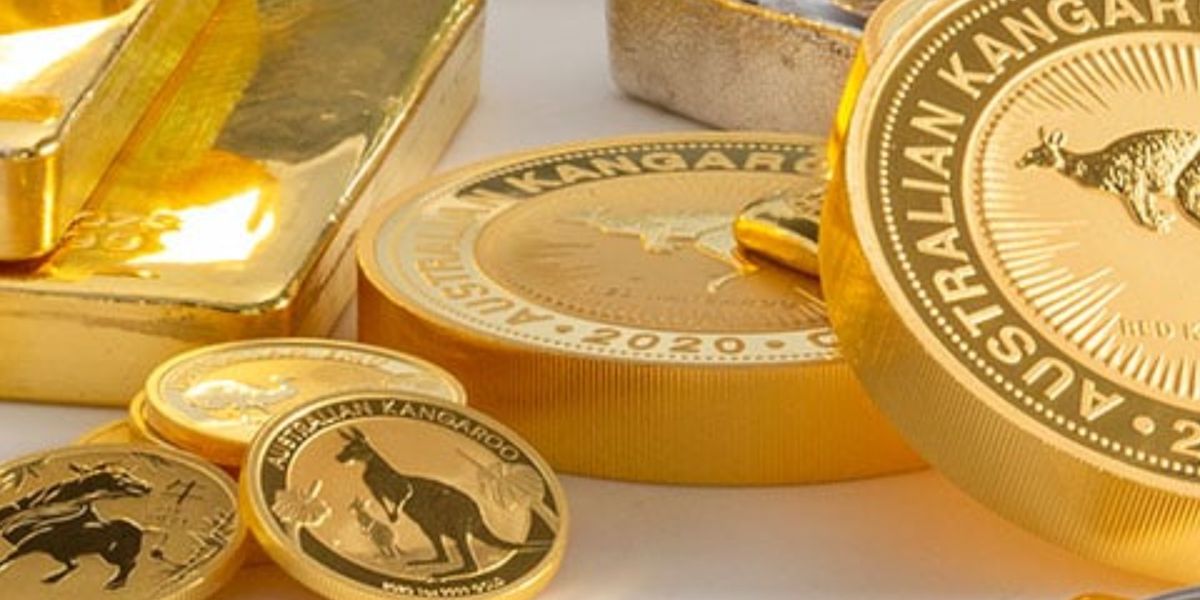
Gold Bars vs. Coins: Which Is Better for Your Strategy?
One of the most debated questions among bullion buyers is Gold Bars vs. Coins: Which Is Better for Your Strategy? The answer depends on your goals.
| Feature | Gold Bars | Gold Coins |
|---|---|---|
| Premium over spot | Lower (2–4%) | Higher (4–8%) |
| Liquidity | High globally, but may require verification | Very high; recognisable legal tender |
| Counterfeit risk | Higher (bars are easier to fake) | Lower, especially for sovereign coins |
| Tax treatment | Often subject to capital gains tax | Some coins (e.g., American Eagle, Britannia) are VAT-free in certain countries |
| Fractional sizes | Available (1g to 1kg) | Very common (1/10 oz, 1/4 oz, 1 oz) |
| Best for strategy | Long-term wealth storage, large capital | Gifting, barter, entry-level stacking |
Which is better for you?
-
Choose bars if you’re investing $10,000+ and want the lowest cost per ounce.
-
Choose coins if you need high liquidity, legal tender protection, or plan to sell in smaller increments.
A balanced method: 70% low-top class rods (1 oz to 10 oz) + 30% break money.
Gold Investment Mistakes to Avoid in the UAE (2026 Guidelines)
The UAE is a global gold buying and selling hub—Dubai’s Gold Souq and DMCC are world-famous. However, the Gold Investment Mistakes to Avoid in the UAE (2026 Guidelines) are important for both citizens and tourists.
Mistake 1: Buying from non-DMCC-registered dealers
Dubai has strict guidelines, but there are still shops without a license.
Solution: Buy only from sellers indexed with DMCC (Dubai Multi-Commodity Centre) or people with DED licenses.
Mistake 2: Ignoring VAT on investment gold
In 2026, financing of gold of grade (99.5% purity and above) in the UAE will be VAT-relaxed. But the ring or low-purity gold is not.
Solution: Ask for a “VAT exemption invoice” before paying.
Mistake 3: Not Getting a Hallmark or Emirates Gold Mark
Counterfeit bars have appeared in tourist areas.
Solution: Ensure every bar has an Emirates Gold Mark (EGM) or a recognised international hallmark.
Mistake 4: Overpaying on “Making Charges” for Coins
Some dealers add high fabrication fees disguised as “handling.”
Solution: Negotiate. In the UAE, margins are often flexible, especially for cash purchases over 10 ounces.
Mistake 5: Failing to Secure Storage Locally
Storing gold in a hotel safe or home rental is risky.
Solution: Use allocated vault services at Brinks, Loomis, or Emirates NBD’s safe deposit boxes.
UAE-specific advantage: You can buy and sell gold with no capital gains tax. But you must keep purchase invoices for any future re-export.
2026 Gold Outlook—Final Verdict on “Is It Worthy?
Combining all factors:
Inflation remains above central bank targets → supports gold.
Interest rates are still moderate → not destroying demand for gold.
The buying of central banks in China, India, and Turkey is ongoing at historic highs for 2025.
But the strong dollar in Q2 2026 might push down prices in the near term.
Who should invest in gold in 2026?
– Retirees who want to preserve their wealth.
– HNWIs diversifying out of stocks.
– UAE expats wanting a portable, tax-free asset.
Who should skip gold?
– Young investors need cash flow.
– Short-term traders (gold’s volatility is unpredictable).
– Anyone without secure storage options.
Final answer: Yes, gold is worthy in 2026—but only if you avoid the five costly mistakes, choose the right product (bars vs. coins), and follow region-specific rules, especially in the UAE.
Frequently Asked Questions (FAQ)
Q1: Is gold a good investment in 2026 compared to crypto?
Gold is less volatile and has 5,000 years of history. Crypto offers higher upside but higher risk. Many portfolios include both gold as stability and crypto as speculation.
Q2: What is the best size of gold bullion to buy for beginners?
Start with 1/10 oz or 1/4 oz gold coins. They are easier to sell and more affordable. Once comfortable, add 1 oz bars for lower premiums.
Q3: Can I buy gold bullion online safely in 2026?
Yes, but only from established dealers like APMEX or JM Bullion or, in the UAE, from DMCC-licensed platforms. Always check for HTTPS, physical address, and customer reviews.
Q4: Can gold bars be traced?
Modern tapes come with serial numbers and test cards. Some are even tracked by blockchain (e.g. through Tradewind or Aurus). This protects you from plagiarism and forgery.
Q5: What is the biggest mistake gold traders make in 2026?
Buy at high prices with leverage. Never borrow cash to buy gold. Use the most efficient and prudent financial savings.
Q6: How do I sell gold within the UAE without losing money?
Sell the lower back to the same supplier or to the DMCC refinery. Avoid pawn shops. Compare buyback rates; they must be within 2% of the worldwide location.
Conclusion:
Gold in 2026 is neither a supernatural money accelerator nor obsolete. Is it worth it? It ultimately depends on his slow horizon, danger tolerance, and predictable trap avoidance skills. As we’ll see, gold offers unmatched inflation protection, portfolio diversification, and geopolitical protection—but it also includes storage fees, no yield, and short-term currency volatility.
The main transport? Knowledge separates the other gold investors from the fools. By internalising the five costly mistakes that gold bullion buyers still make—and how to avoid them, you can by no means overpay, buy fakes, or recklessly invest. Understanding gold bars vs. coins: Which is better for your strategy? Your cash flow allows you to align product priorities with desire and budget. And for those investing within the Emirates, following the Gold Investment Mistakes (2026 Guidelines) to avoid in the UAE ensures profits from Dubai’s tax-free and regulated market instead of falling victim to unauthorised trades or hidden VAT costs.