
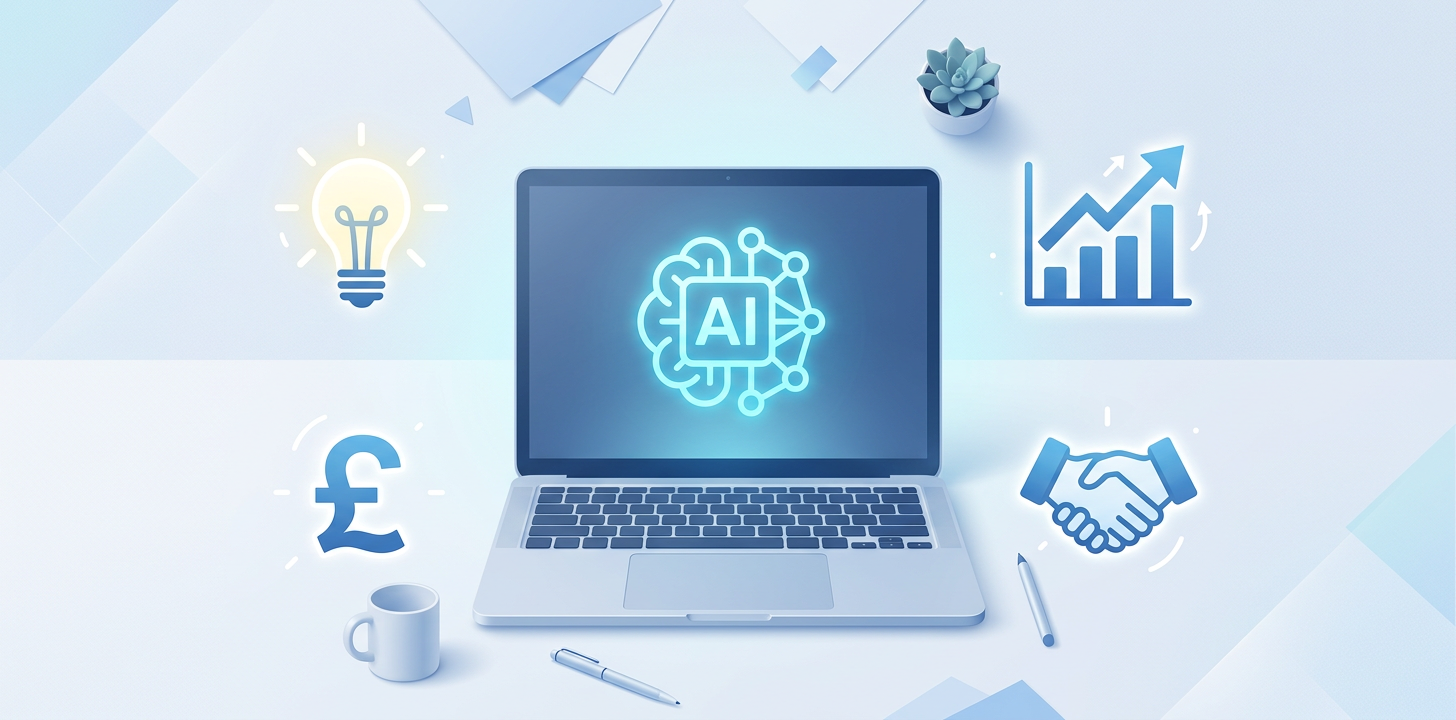
Today we tell you how to start an AI-powered small business. Starting a small business used to mean savings, a business loan, or at least a bit of spare cash to get going. You needed money for a website, money for design work, money for tools, and often money to look credible enough for someone to trust you with their project. That is no longer true. In 2026, free AI tools have quietly removed most of the traditional barriers to entry. Tasks that once required hiring a professional or spending weeks learning a new skill can now be done in minutes, at no cost, by anyone willing to put in a bit of effort. Writing, design, customer communication, and basic admin work are all within reach using nothing more than a laptop and an internet connection.
This shift matters most for people who want to start something on the side without risking money they cannot afford to lose. Students, parents managing a household, people between jobs, and anyone simply curious about running their own business now have a genuine, low-risk way to test an idea before fully committing.
This guide walks you through exactly how to do that—from choosing the right business idea and picking free tools that actually work to getting your first paying client without spending a penny on advertising. Every step here has been kept realistic and beginner-friendly, so you can start today rather than spend weeks planning. If you want the broader fundamentals first, our complete beginner’s guide to starting a business with no money is a good companion read alongside this one.
Why AI Has Changed the Rules for New Business Owners
A few years ago, starting a service business meant either having the skills yourself or paying someone else to do the work for you. Design, writing, video editing, and customer support all required either training or a budget.
AI tools have closed that gap. Free-tier platforms can now write, design, edit, and even talk to customers at a standard that used to require a trained professional. That does not mean the work is worthless — it means the barrier to producing good work has dropped dramatically, and the opportunity has shifted to whoever moves first and learns to use these tools properly.
For someone in the UK looking to start something on the side, this is genuinely good timing. You are not competing against people with big budgets. You are competing against people who have not yet worked out how to use these tools well.
Step 1: Choose a Business Idea That Plays to AI’s Strengths
Not every idea suits a zero-budget AI approach. The ones that work best share three things: they solve a problem people already pay for, they can be delivered mostly using free tools, and they do not need months of training before you can deliver decent results.
A few ideas worth considering:
Content writing and blog articles — Businesses always need blog posts, product descriptions, and website copy. AI helps you draft faster; you bring the editing, tone, and fact-checking. If this route interests you, it’s worth learning how to write a guest post that gets accepted, since guest posting is one of the easiest ways to build a writing portfolio from scratch.
Social media content for local businesses—Cafés, salons, and independent shops often know they should be posting regularly but never get around to it. Offering a monthly content package is a simple, repeatable service.
Virtual assistant work—email management, scheduling, basic admin, and even light data entry. AI tools can help you draft replies and organize tasks quickly, letting you take on more clients than you could manually. Our guide to asynchronous data entry for small business covers this in more depth if it sounds like the right fit. You can also browse trusted remote job boards to see what VA and admin roles are actually in demand right now.
Simple graphic design — Social media graphics, flyers, and basic branding for small businesses that cannot afford a designer.
Pick the one that overlaps with something you already understand a little. If you have ever run a social media page for yourself, the content route will feel far more natural than starting from zero.
Step 2: Free AI Tools You Can Start Using Today
You do not need paid software to deliver a professional result. A basic toolkit for a zero-budget business usually covers four areas:
-
Writing and content — free-tier AI writing assistants can help you draft blog posts, social captions, and email copy quickly, which you then edit into your own voice.
-
Design — several design platforms now include free AI features for social graphics, simple logos, and image editing, so you don’t need a design background to produce something presentable.
-
Customer communication — free chatbot builders can handle basic FAQs on a website while you focus on higher-value work.
-
Organization—free tools like Google Sheets, Notion, and Google Calendar keep your clients, deadlines, and invoices in order without any subscription cost.
The specific tool matters less than learning to use two or three of them properly. A narrow toolkit used well beats a wide one used badly.
Step 3: Set Everything Up Without Spending Anything
You can put together a fully functioning small business presence at zero cost:
-
Website — free platforms such as Blogger or a free-tier WordPress site let you put up a basic portfolio or landing page.
-
Email — a free Gmail account with your business name works perfectly well at this stage; a custom domain email can come later once you have income.
-
Social presence — a LinkedIn profile and one or two relevant platforms (Instagram or Facebook, depending on your niche) are enough to start showing up in front of potential clients.
Resist the urge to make this stage perfect. The goal is to look credible enough to get your first client, not to build a polished brand from day one.
Step 4: Get Your First Clients Without Paying for Ads
This is usually the hardest part, and it is where most people give up too early. A few approaches that consistently work without any ad spend:
-
Direct outreach—identify 15 to 20 small businesses that clearly need what you offer (a shop with no social media activity, a local business with an outdated website) and send a short, specific message explaining what you can do for them.
-
Free samples — create two or three sample pieces of work for a fictional or real local business and share them on LinkedIn. This becomes your portfolio before you have any actual clients.
-
UK-focused community groups — Facebook groups for local business owners, LinkedIn groups, and relevant subreddits are often full of people asking for exactly the kind of help you can offer.
-
Referrals from your first client — once you deliver good work for one client, ask directly if they know anyone else who might need the same service. This is often the fastest way to grow once you have a single success story.
Keep your first few prices modest. The goal at this stage is reviews and proof of work, not maximum profit.
Step 5: Reinvest Only Once Income Starts Coming In
Once you have a small, steady stream of income, that is the time to consider spending—not before. A paid tool subscription, a custom domain, or paid advertising all make far more sense once you know your service actually sells.
A sensible order of priorities once you have your first paying clients:
-
A proper business email with your own domain
-
One paid tool that clearly saves you time on your most common task
-
A small budget for targeted outreach or advertising, once you know what converts
Common Mistakes to Avoid
Buying tools before validating the idea. It is tempting to subscribe to several paid platforms before you have a single client. Wait until you know the service sells.
Trying to offer everything at once. A focused service — one thing you do well — is far easier to market and deliver than a vague “I do everything with AI” pitch.
Underpricing forever. Modest pricing makes sense for your first few clients, but raise your rates once you have proof that your work delivers results.
Skipping quality control. AI-assisted output is a starting point, not a finished product. Always review and edit before sending anything to a client.
Frequently Asked Questions
Can I really start a business with no money? Yes, if you offer a service rather than a physical product. Free tools and a laptop are enough to begin.
Do I need technical or design skills? No. Most free AI tools are built for beginners and work through simple prompts.
How long until I get my first paying client? Usually two to four weeks with consistent outreach and a small sample portfolio.
Should I target UK clients or go international? Start locally in the UK, then expand to Europe once you have a few reviews.
When should I start paying for tools? Only once you have steady income and know the service actually sells.
Do I need to register as a business straight away? You can usually start as a sole trader with minimal paperwork — check current HMRC guidance for your situation.
Conclusion
Starting a business with no money used to mean limiting yourself to whatever you could do entirely on your own. That constraint has largely disappeared. With the right free tools, a clear focus, and consistent outreach, it is entirely possible to build a real, paying business from a laptop and an internet connection — no investment required.
The tools are free. The only real cost is the time it takes to learn them properly and the effort it takes to find your first client.